
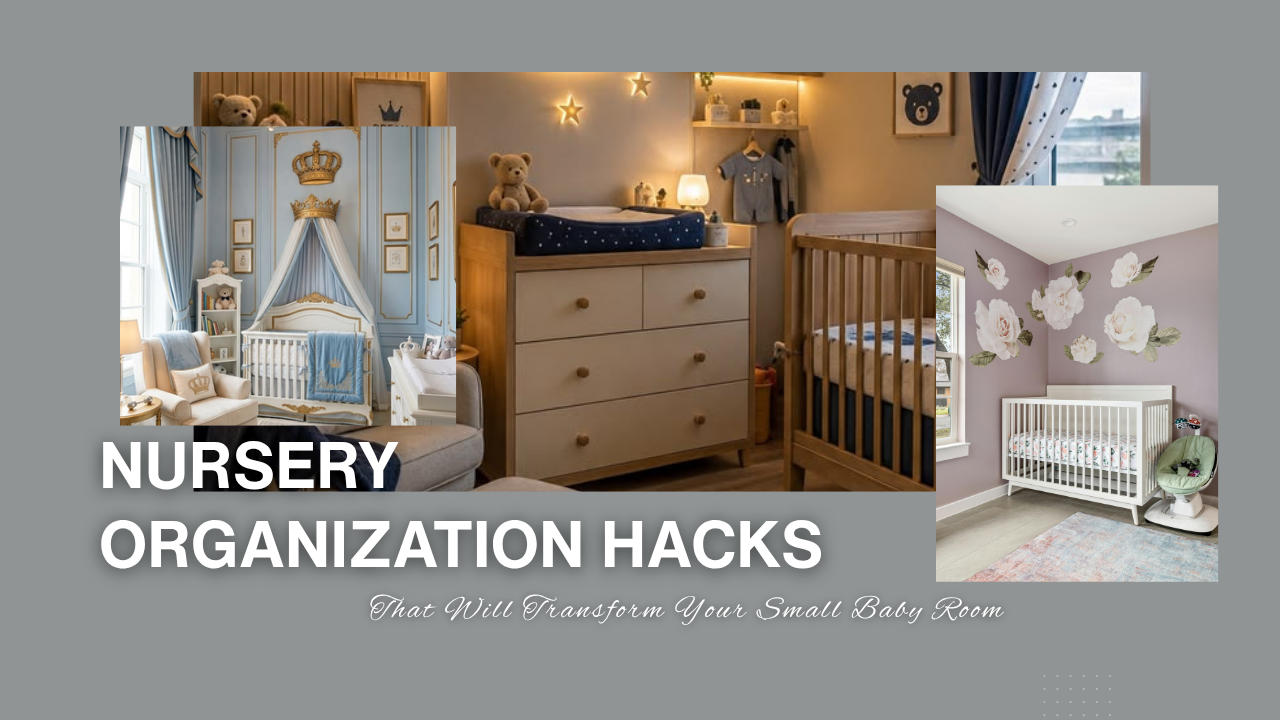
Best nursery organization ideas. A small baby room can quickly become cluttered with diapers, clothes, toys, feeding supplies, and nursery essentials. The good news is that you don’t need a large room to create a comfortable and organized nursery. With smart nursery organization ideas, you can make every corner of the room useful while keeping it attractive and practical.

The key is to focus on space-saving nursery storage, functional furniture, and simple organization systems. Instead of filling the room with unnecessary items, choose solutions that serve multiple purposes. These small changes can make daily routines easier while giving your baby a clean, peaceful space.
1. Use Vertical Wall Storage
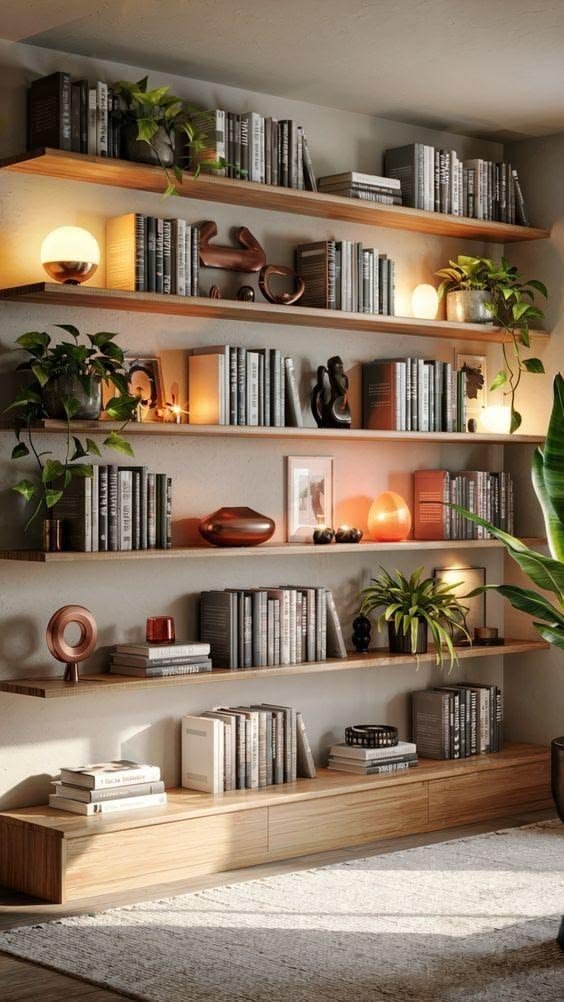
When floor space is limited, look upward and make use of your walls. Floating shelves, wall-mounted baskets, and narrow storage units can provide valuable space for diapers, books, blankets, and baby accessories without taking up much floor area. Keep frequently used items within easy reach.
Source: Pinterest
Wall storage can also become part of your nursery decor when arranged thoughtfully. Use matching baskets or neutral-colored containers to create a clean appearance. Make sure shelves and furniture are securely installed and keep potentially dangerous items away from the baby’s reach.
2. Choose Multi-Functional Nursery Furniture
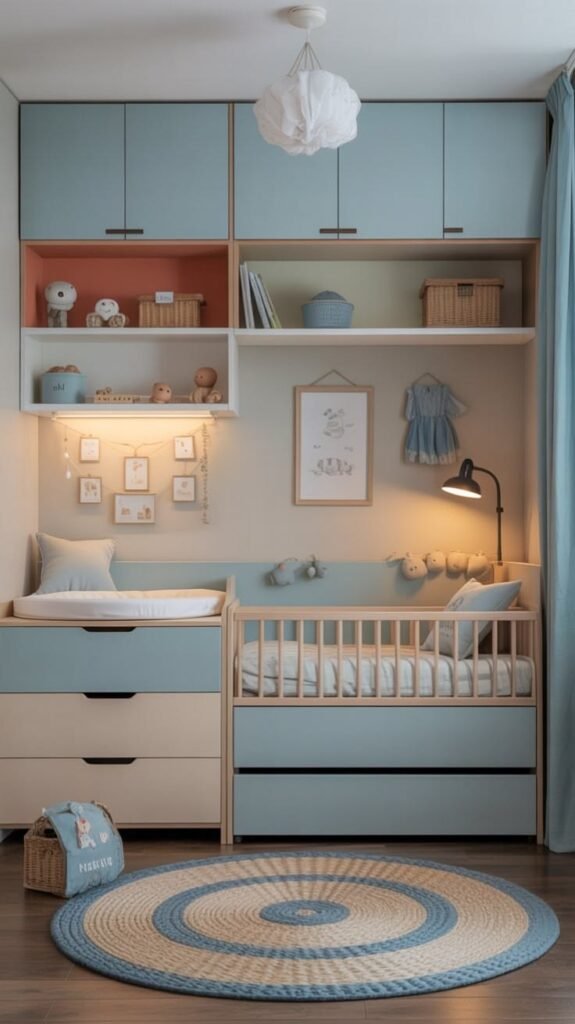
Furniture that serves more than one purpose is ideal for a small nursery. A changing table with built-in drawers can provide both a diaper-changing station and storage for clothes, wipes, creams, and other essentials. Similarly, a crib with drawers underneath can help maximize unused space.
Source: Pinterest
Before purchasing nursery furniture, consider how much storage it provides compared with the floor space it occupies. Compact furniture with multiple functions can help prevent the room from feeling overcrowded. Prioritize practical pieces that you will actually use throughout your baby’s first years.
3. Maximize Closet Space
A small nursery closet can become surprisingly useful with the right organization system. Add hanging organizers, shelf dividers, storage baskets, and adjustable rods to create separate areas for clothing, blankets, shoes, and accessories. Organizing items by category makes it easier to find what you need quickly.

Source: Pinterest
Consider using matching storage bins for items that aren’t needed every day. Labeling containers can make nursery organization even easier, especially when storing different clothing sizes. As your baby grows, regularly remove items that no longer fit to prevent the closet from becoming overcrowded.
4. Make Use of Under-Crib Storage
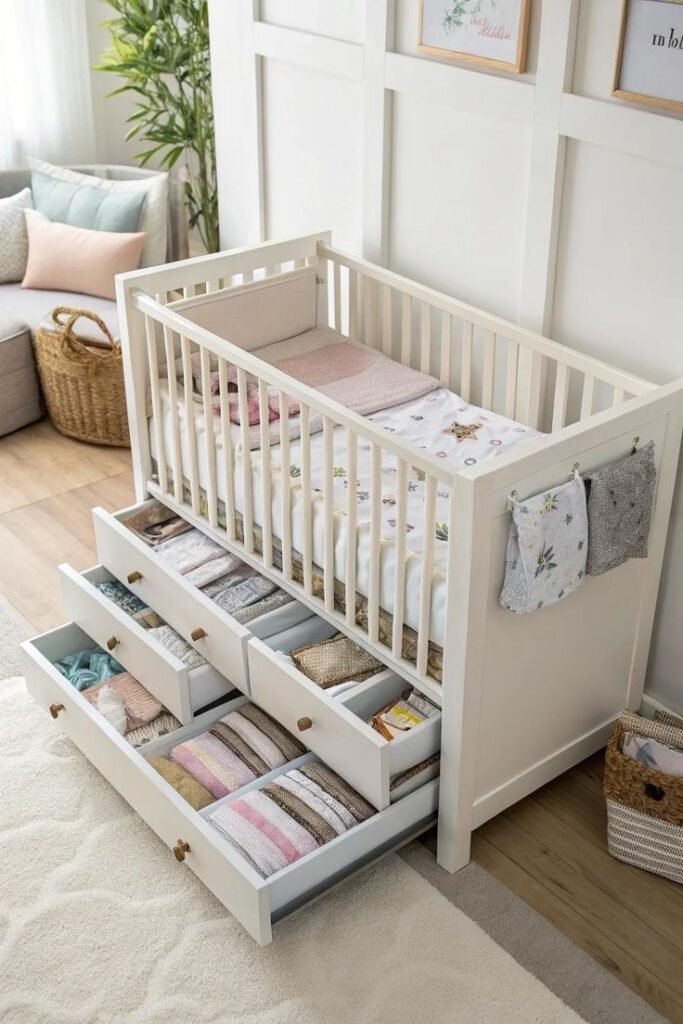
The space underneath a crib is often overlooked, but it can provide excellent hidden storage. Flat storage boxes or properly designed drawers can hold extra diapers, seasonal clothing, bedding, blankets, and other nursery supplies. This keeps less frequently used items out of sight while making use of otherwise wasted space.
Source: Pinterest
Choose containers that are easy to pull out and clearly labeled so you don’t have to search through everything. Avoid storing anything that could pose a safety risk to your baby. Keeping the storage area neat also makes cleaning around the crib much easier.
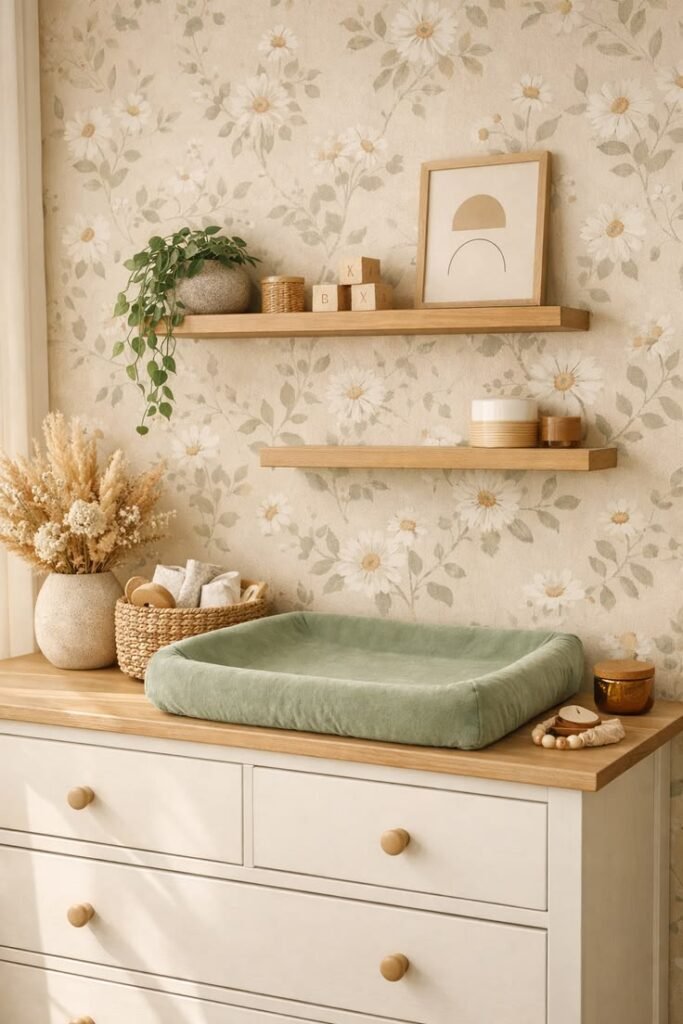
5. Create a Dedicated Changing Station
A dedicated changing station can make diaper changes much faster and more convenient. Keep diapers, wipes, creams, spare clothes, and changing mats organized together so you don’t have to search around the room. Small baskets or drawer organizers can help separate each category.
Source: Pinterest
If you have very limited space, consider a compact changing setup rather than a large changing table. A dresser with a properly secured changing pad can provide storage and functionality in one piece of furniture. Keep all changing supplies within your reach while your baby is on the changing surface.
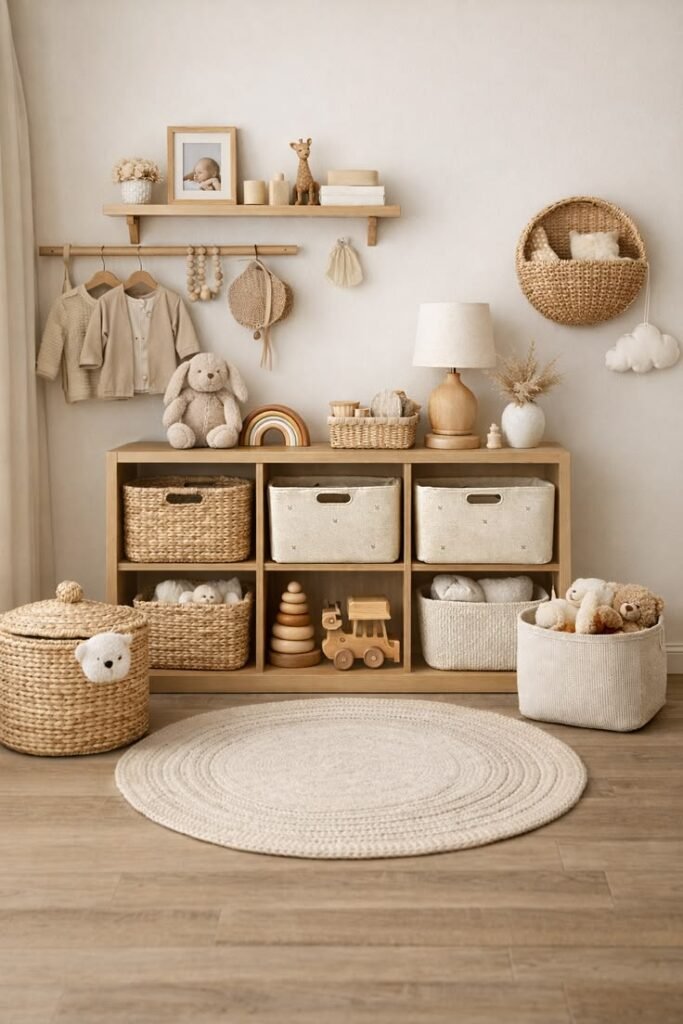
6. Use Baskets and Storage Bins
Baskets and storage bins are simple solutions for keeping small nursery items organized. They can be used for toys, stuffed animals, blankets, books, burp cloths, and extra baby supplies. Choose containers that fit neatly into shelves, cabinets, or open storage spaces.
Source: Pinterest
Grouping similar items together also makes tidying up much easier. Instead of having small items scattered around the room, you can quickly return everything to its designated basket. For a more polished nursery design, choose storage containers that complement the room’s colors and decor
7. Organize Baby Clothes by Size
Babies grow quickly, which means their wardrobes can become difficult to manage. Organize clothing by size and type so you can easily find the right outfits when needed. Separate newborn, 0–3 month, 3–6 month, and larger sizes to prevent unnecessary searching.

Source: Pinterest
You can also keep future sizes in labeled bins until your baby is ready for them. This prevents the closet and drawers from becoming overloaded with clothes that aren’t currently being used. Regularly reviewing the wardrobe will help you maintain an organized nursery as your baby grows.
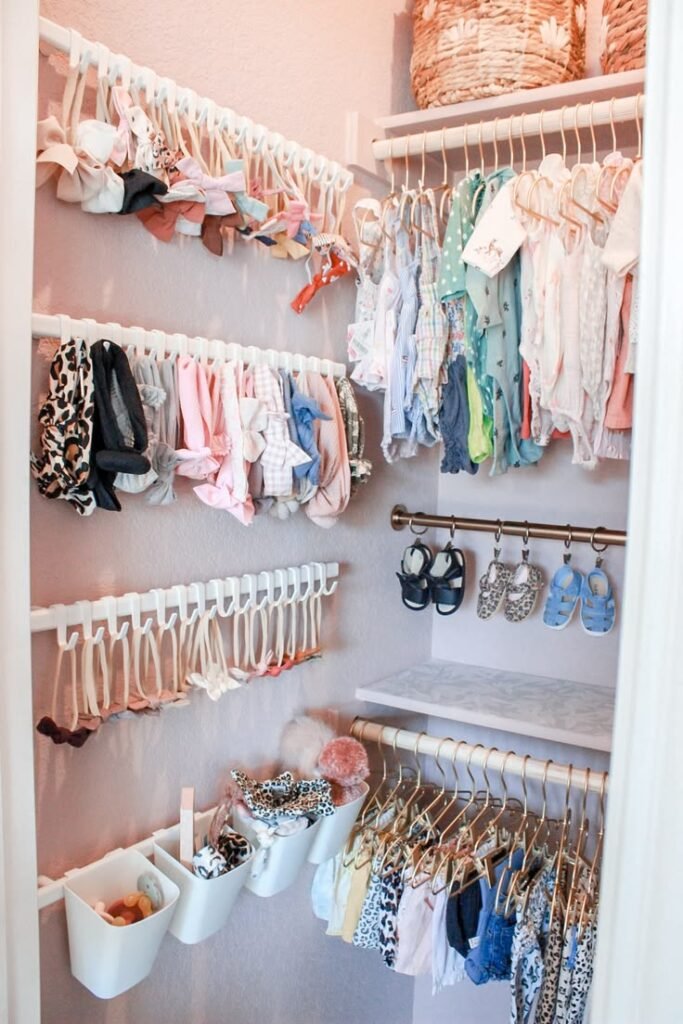
8. Use the Back of the Door
The back of a nursery door can provide additional storage without taking up valuable floor space. Over-the-door organizers can hold small toys, baby accessories, toiletries, shoes, or other lightweight essentials. This is especially useful when cabinets and closets are already full.
Source: Pinterest
However, choose door organizers carefully and make sure they are securely attached and appropriate for the items being stored. Keep anything unsafe or potentially hazardous out of your baby’s reach. Using this overlooked area can give you extra storage without making the nursery feel crowded.
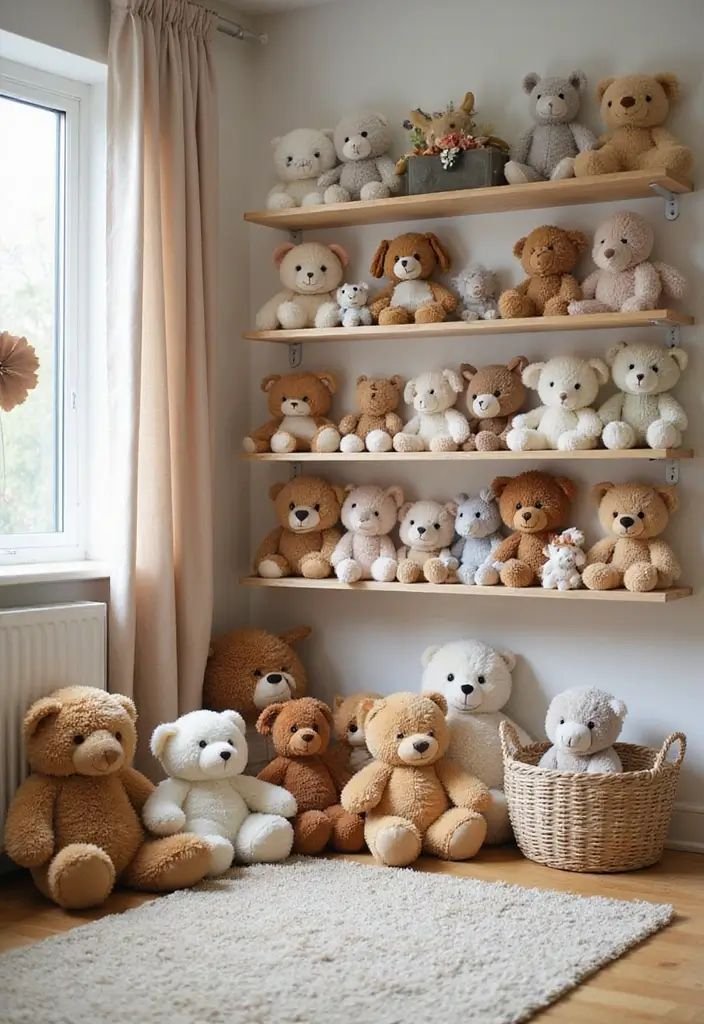
9. Create a Simple Toy Storage System
Too many toys can make a small nursery look messy very quickly. Instead of keeping every toy visible, use a simple rotation system where only a selection of toys is available at one time. Store the remaining toys in labeled bins or containers.
Source: Pinterest
A toy rotation can also make old toys feel new again when they are brought back into the room. Choose low, accessible storage as your child becomes more mobile and independent. Keep heavier items stored securely and avoid placing furniture or storage where it could create a climbing hazard.
Also Read : Best Multipurpose Furniture for Tiny Homes
10. Keep Everyday Essentials Within Reach
The best nursery organization system is one that makes everyday routines easier. Keep frequently used items such as diapers, wipes, burp cloths, and basic clothing close to the areas where you use them. This reduces unnecessary movement during busy moments.
Source: Pinterest
At the same time, avoid filling every surface with supplies. A small basket or organizer can keep daily essentials together without creating visual clutter. Store less frequently used products elsewhere so the nursery remains clean, functional, and easy to maintain.
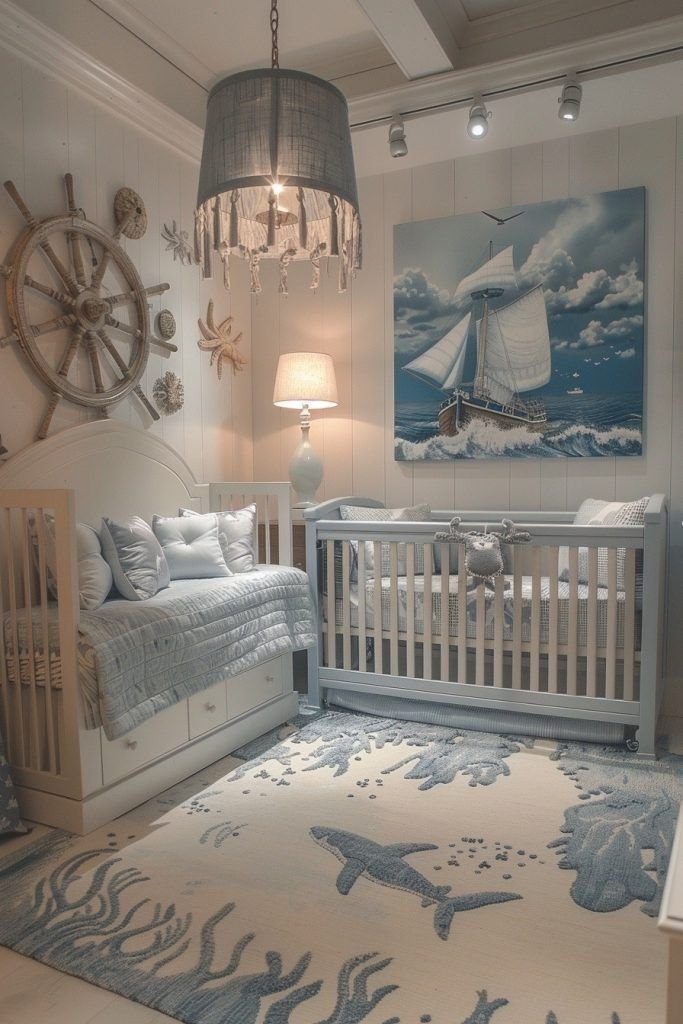
11. Use a Minimalist Nursery Layout
A minimalist layout can make a small nursery feel significantly larger. Start by identifying the essential furniture pieces and leave enough open space for comfortable movement around the room. Avoid purchasing furniture simply because it looks attractive if it doesn’t serve a practical purpose.

Source: Pinterest
Think carefully about the placement of the crib, changing station, storage, and seating area. Creating clear zones for sleeping, changing, storing, and feeding can make the room easier to use. A simple layout can also make everyday cleaning and organization much more manageable.
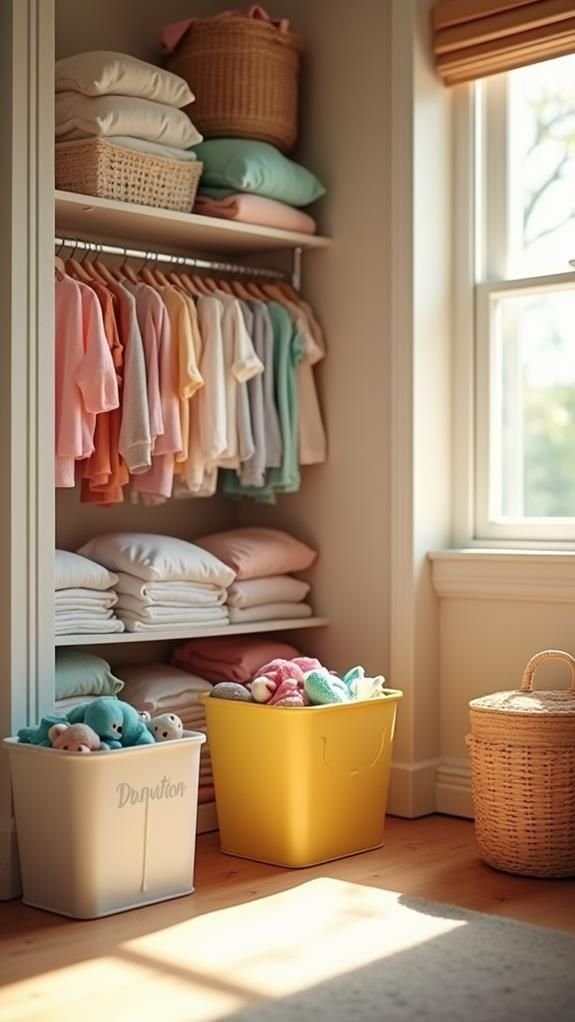
12. Declutter the Nursery Regularly
Even the best nursery organization system needs regular maintenance. Babies quickly outgrow clothes, toys, and equipment, so make decluttering part of your routine. Remove items that are no longer useful and decide whether they should be stored, donated, or passed along.
Source: Pinterest
Try not to let unnecessary items accumulate in drawers and closets. A quick organization session every few weeks can prevent the nursery from becoming overwhelming. Keeping only the things you actually need will help your small baby room remain functional and comfortable.
Conclusion
Creating an organized small nursery doesn’t require expensive furniture or a large amount of space. By using vertical storage, multi-functional furniture, baskets, under-crib storage, and smart closet organization, you can make the most of every available area. The goal is to create a room that works for both parents and baby.
Start with the areas that cause the most clutter and introduce one organization solution at a time. A well-planned nursery can feel spacious, peaceful, and practical even when the room is small. With a little creativity and regular decluttering, you can create a functional baby room that makes everyday life easier.